You remember the call explaining why a case of lettuce had become more expensive. A difficult harvest, a supply shortage, a change in origin. You accepted the increase because the explanation made sense. Six deliveries later, the price is still there. Has the market stayed high, or has nobody revisited your quote?
For an independent grocer, that is a useful purchasing question. Watching for increases tells you when costs get worse. Checking whether a past increase has unwound can reveal a different opportunity: a price worth discussing even though this week's invoice shows no change.
The work starts with one repeat purchase, a comparable market report, and a reliable record of what your store paid. You do not need to turn your back office into a commodity trading desk.
An unchanged price can still deserve a conversation
A change report compares the current invoice with the previous one. If both say $34 per case, the difference is zero. That answers a narrow question correctly. It does not tell you whether the buying conditions behind the original $34 still apply.
Food markets can reverse sharply. In a June 2025 analysis, the USDA Economic Research Service reported average US wholesale egg prices of $8.20 per dozen in February 2025 and $3.74 in April. It also explained that contracts and pricing strategies affect how retail prices respond. This is a historical US egg example, not a price benchmark for Canadian produce.
The useful lesson is about review timing. When a supplier explains an increase, record the explanation alongside the invoice date. A seasonal shortage suggests a different follow-up question from a permanent change in packaging or delivery service. Ask when the price will next be reviewed while the reason is still fresh.
Find a market report that resembles what you buy
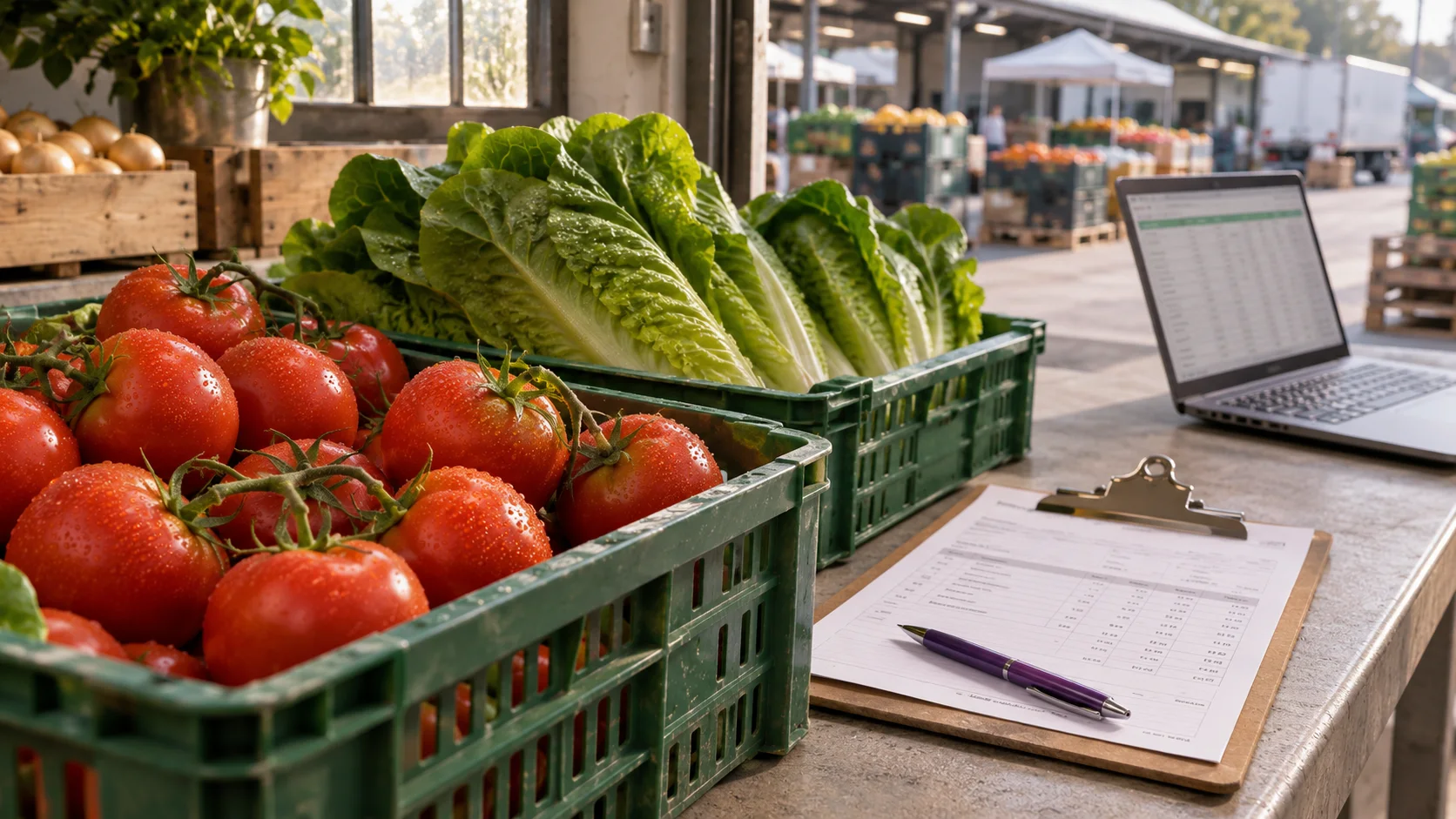
For buyers around Toronto and Montreal, Agriculture and Agri-Food Canada's Infohort reports are a practical starting point. They publish wholesale asking-price ranges with commodity, variety, origin, and pack information. The reported offers are not guaranteed transaction prices, negotiated deals, or quotations delivered to your door.
Choose the closest available specification before looking at the price. A lower figure for a different pack, origin, or quality is weak evidence. If your product is not represented well enough, the honest result is that the report cannot answer your question.
Use several observations rather than one unusually cheap day. The monthly Infohort report selector can help you find a longer pattern; shorter reporting periods are more useful when the buying market moves quickly. Match each invoice to the information available around its purchasing date.
Before you compare
Are these two prices comparable?
Check each detail against the invoice and the market report. An unchecked box is something to clarify before drawing a conclusion.
0 of 7 details checked. Start with the product specification.
Completing this check prepares a better question. It does not establish that a supplier's price is wrong.
Build a short history for one item
Pick a product you buy often enough to have a useful sequence of invoices. Start with six to eight weeks, extending the period if needed. Write down the invoice date and number, exact description, case specification, quantity, price, and any relevant allowance. Our guide to comparing supplier invoices explains the basic matching process.
Keep the supplier's price and the public market range as separate observations. A market midpoint can be convenient for a chart, but it is not a verdict on what your delivered case should cost. A shaded low-to-high band is a more honest way to show a quoted range.
| Observation | Earlier period | Later period |
|---|---|---|
| Comparable wholesale asking range | $28–$32 per case | $20–$24 per case |
| Store's invoiced delivered price | $34 per case | $34 per case |
| Next step | Record the specification | Ask what explains the current delivered quote |
In this example, you have enough to ask a question. You have not established an overcharge or a recoverable saving. Perhaps the supplier has committed stock at an earlier cost. Perhaps your delivery terms differ. Perhaps the quotation is simply ready for a review.
Ask about the price and its next review
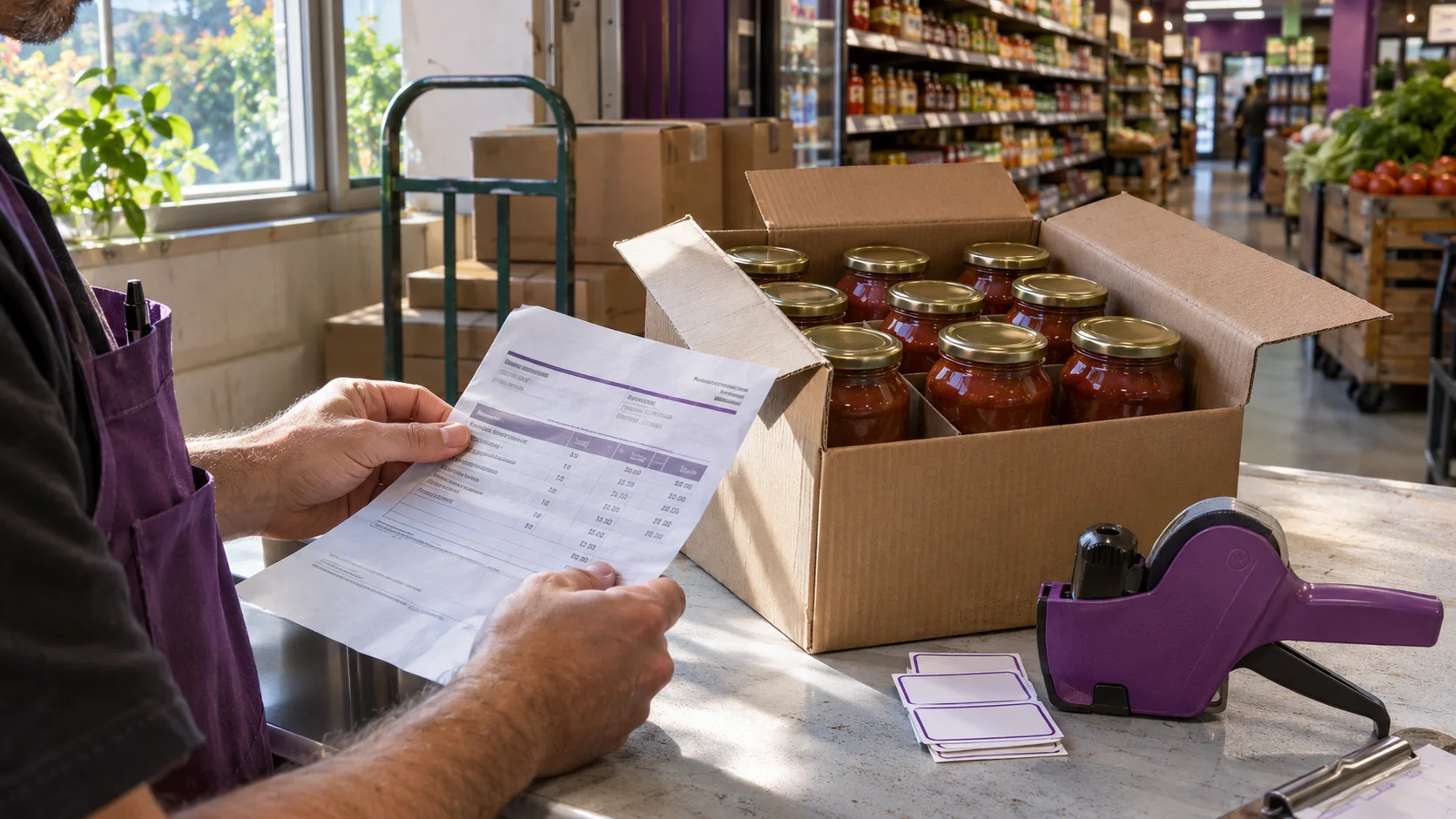
Send a compact item schedule rather than a folder of unexplained invoices. One page should identify the product, the relevant purchases, the comparable report, and the answer you need. A supplier can respond more usefully when the specification and dates are visible.
“For the same [item, origin, grade and pack], we paid [price] on [date] and [price] on [date]. The comparable [market] range has eased over [period]. What explains our current delivered price, and when will it next be reviewed?”
If the supplier points to freight, ask whether the change is in the goods price or a separate charge. If it is a contract, ask when that pricing period ends. If quality explains the premium, check that the invoice specification reflects what you are receiving. These answers make your next review more focused.
Agree on a follow-up date or condition, then check the next applicable invoice. A promised lower quotation is useful only when it reaches the purchases you actually make. The supplier response checklist can help organize the supporting evidence.
Use CostBeacon for your side of the evidence
CostBeacon extracts supplier invoice lines and organizes product cost history. That gives you a place to inspect what your store paid across uploaded invoices and open the original document when an entry needs checking. The five-step CostBeacon guide shows the workflow.
The market comparison remains your buying exercise. CostBeacon does not currently import Infohort or decide that a supplier should have reduced a price. Its contribution is the store's own history: the part that is otherwise scattered across PDFs, emails, and folders.
After a successful review, record the new quotation and check subsequent purchases. Keep both sides of the conversation: the earlier reason for the increase and the eventual reason for the current price. Over time, that produces a much better basis for purchasing than memory alone.
Questions grocery buyers ask
Does a lower wholesale report mean my supplier is overcharging?
No. Market location, quality, pack, freight, payment terms, and the supplier's purchasing commitments can all affect the comparison. Treat the report as context for a specific question. Ask the supplier to explain a persistent difference after checking that the products and terms are comparable.
Should I change my shelf price when a market report falls?
Check your actual acquisition cost and current stock first. A market movement does not automatically change what you paid. Retail pricing also depends on your customers, competitive position, waste, and the role of the product in the store. The first step here is reviewing the buying price.
What if the pack or origin changed?
Keep those purchases separate until you have a defensible comparison. Convert quantities only where the specifications support it. A different case count, grade, or origin may explain a price difference; it should not disappear inside an average or an automatically connected trend line.
How often should I repeat the review?
Match the cadence to the product and your buying cycle. Begin with a short list of frequently purchased items, then review them when the reason for an earlier increase changes or at an agreed supplier review date. Consistency matters more than checking every market every day.
Research note: the US egg figures are reported historical data. The produce comparison is hypothetical, and no private customer invoices were used. The cover is an editorial illustration created for this article.
Clearer costs. Better buying decisions.
Explore the journal ↗