

Effectively managing supplier costs is crucial for protecting business margins and long-term profitability. This guide covers the fundamentals: understanding your current supplier landscape, negotiating better contracts, monitoring performance, using technology, building strong relationships, and responding proactively when costs rise.
CostBeacon turns this workflow into an invoice-backed system: see the invoice price tracking product, compare plans and trial options, or review our supplier price tracking software page for the commercial overview.
The central idea: supplier cost management works best when invoice data becomes a live operating signal, not a spreadsheet reviewed after the damage is done.
Three steps to supplier cost control
Map the supplier base
Turn invoices and CSV exports into one supplier view with spend, categories, and criticality.
Monitor invoice changes
Compare every new line item to history so a quiet supplier increase is visible right away.
Protect margin early
Act while the increase is still fresh: question it, renegotiate, or switch buying plans.
Understanding your current supplier landscape
Before you can manage supplier costs, you need a clear view of who your suppliers are, what you buy from them, how much you spend, and the terms under which you operate. This is the foundation for spotting opportunity and risk.
What is supplier management?
Supplier management is the set of activities involved in sourcing, engaging, and managing third-party vendors that provide goods or services to your business. It is about optimizing value, ensuring quality, reducing risk, and controlling costs.
Why supplier management matters
Supplier management directly affects the bottom line. Weak oversight can lead to inflated costs, quality issues, supply chain disruptions, and unhappy customers. Strong oversight can unlock cost savings, improve quality, strengthen resilience, and give you better procurement decisions.
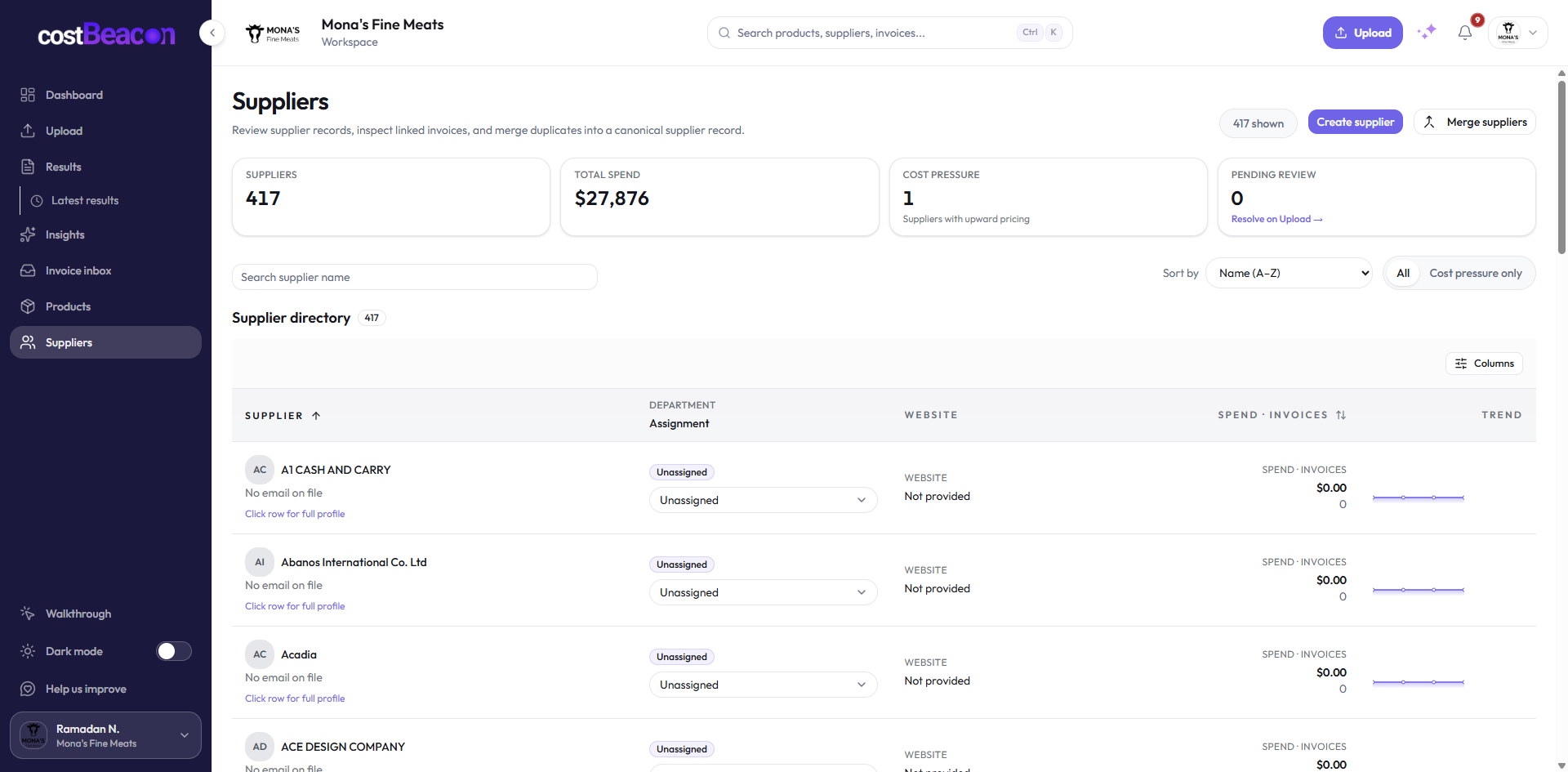
Map suppliers and spend
Start by building a practical supplier map that includes:
- Supplier name and contact information: basic, but essential when something needs follow-up.
- Products or services provided: a clear description of what each supplier delivers.
- Annual spend: the total spent over a defined period, such as the last 12 to 24 months.
- Contract terms: start and end dates, payment terms, pricing structures, renewal clauses, and escalation language.
- Performance signals: delivery times, quality issues, responsiveness, and invoice accuracy.
- Strategic importance: whether the supplier is easy to replace or critical to operations.
Analyze COGS and key cost drivers
Your cost of goods sold reflects what it costs to produce the goods or services you sell. Supplier costs often show up in direct materials, components, packaging, freight, and other input costs. Break COGS into the pieces you can influence, then identify the suppliers and items creating the most pressure.
Look for cost drivers such as freight increases, volatile raw materials, single-source dependencies, tariff exposure, labor cost pass-through, or compliance requirements. This helps you decide whether to negotiate, switch suppliers, adjust purchasing, or redesign the product or process.
Strategies for negotiating better supplier contracts
Negotiation is not just about pushing prices down. Good supplier negotiation creates agreements that deliver stability, quality, and value over time.
Prepare with data
The best negotiation work happens before the meeting. Gather historical spend, recent price changes, supplier performance, market benchmarks, volume requirements, and your walk-away point. If you can show exactly where prices moved and what volume you bring, the discussion becomes more concrete.
Use the right tactics
- Volume discounts: consolidate spend when it increases leverage without creating fragile dependency.
- Long-term contracts: exchange commitment for better pricing or more predictable increases.
- Payment terms: improve cash flow with longer terms, or use early payment discounts when liquidity allows.
- Bundling: combine related products or services into a package price.
- Escalation clauses: tie price increases to objective indices instead of vague supplier discretion.
- Total cost of ownership: evaluate acquisition, usage, maintenance, quality, replacement, and disposal costs, not only unit price.
Know when to find a new supplier
Consider alternatives when a supplier shows persistent unexplained price increases, declining quality, weak communication, lack of innovation, poor service, or single-source risk. Existing relationships are valuable, but margin protection sometimes requires a credible backup path.
Implementing supplier performance monitoring
Negotiating good terms is only half the work. You also need to know whether those terms are being honored and whether the supplier continues to deliver value.
Define KPIs
Useful supplier KPIs usually fall into four groups:
- Cost KPIs: price adherence, cost savings achieved, invoice accuracy, and payment term compliance.
- Quality KPIs: defect rate, return rate, and customer complaints caused by supplier quality.
- Delivery KPIs: on-time delivery, fill rate, lead time, and responsiveness.
- Compliance KPIs: regulatory compliance, documentation, and ESG commitments where relevant.
Run a regular review process
Critical suppliers may need monthly or quarterly review, while lower-risk suppliers may only need annual checks. A useful review includes KPI trends, invoice-level exceptions, supplier feedback, and concrete next steps. The point is not to create paperwork; it is to make supplier conversations timely and specific.
Address underperformance
When a supplier underperforms, identify root causes, agree on corrective actions, set timelines, and define escalation. For critical items, pair the performance plan with risk mitigation such as alternate suppliers, contingency inventory, or financial health checks.
Leveraging technology for cost control and visibility
Manual tracking creates three problems: it takes too much time, it introduces errors, and it tends to reveal problems late. Cost control improves when invoices, line items, and supplier histories become searchable and monitored automatically.
What cost intelligence software should do
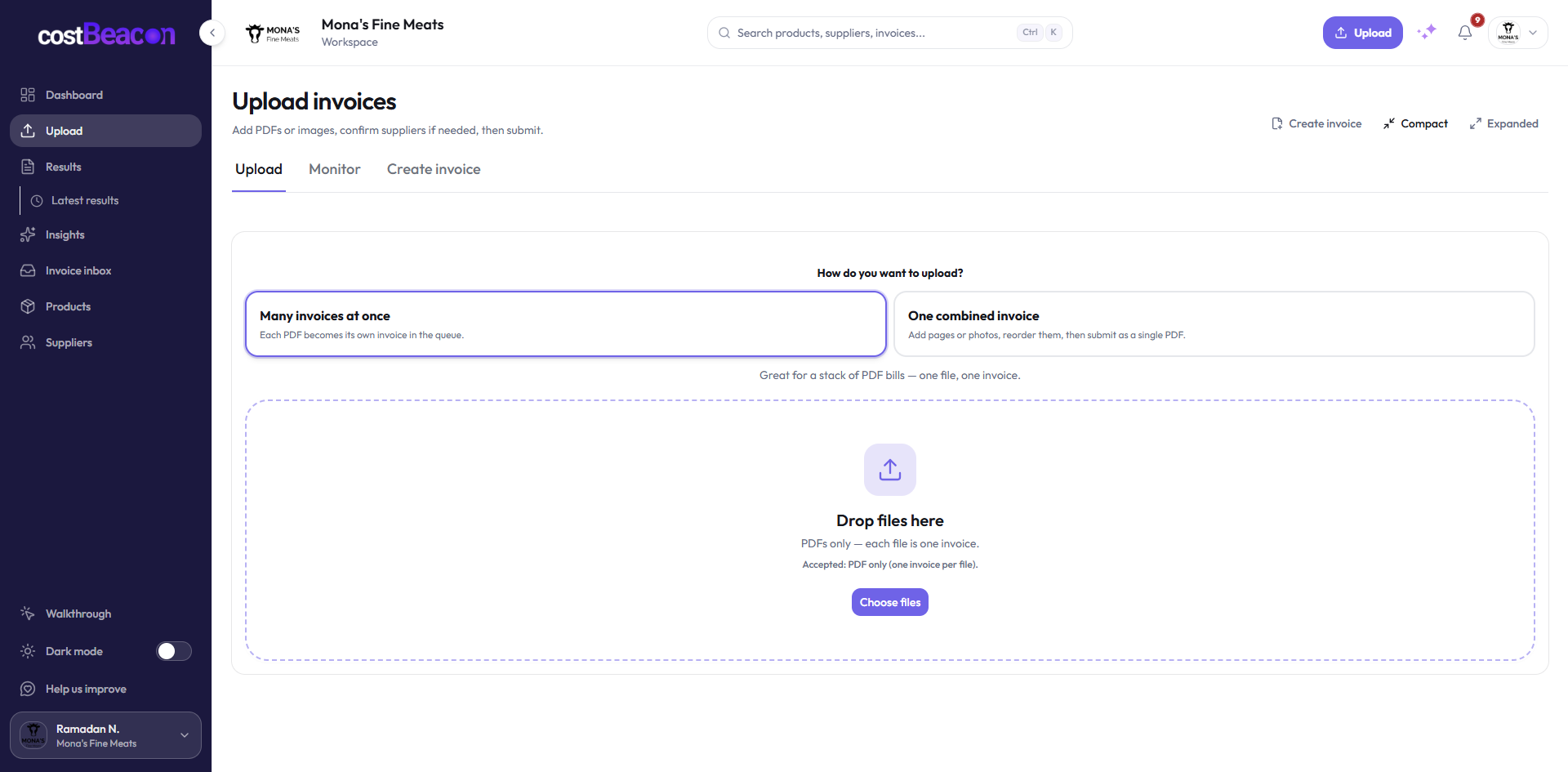
- Extract invoice data: supplier, item, quantity, unit price, date, and other fields from PDFs, photos, scans, or email attachments.
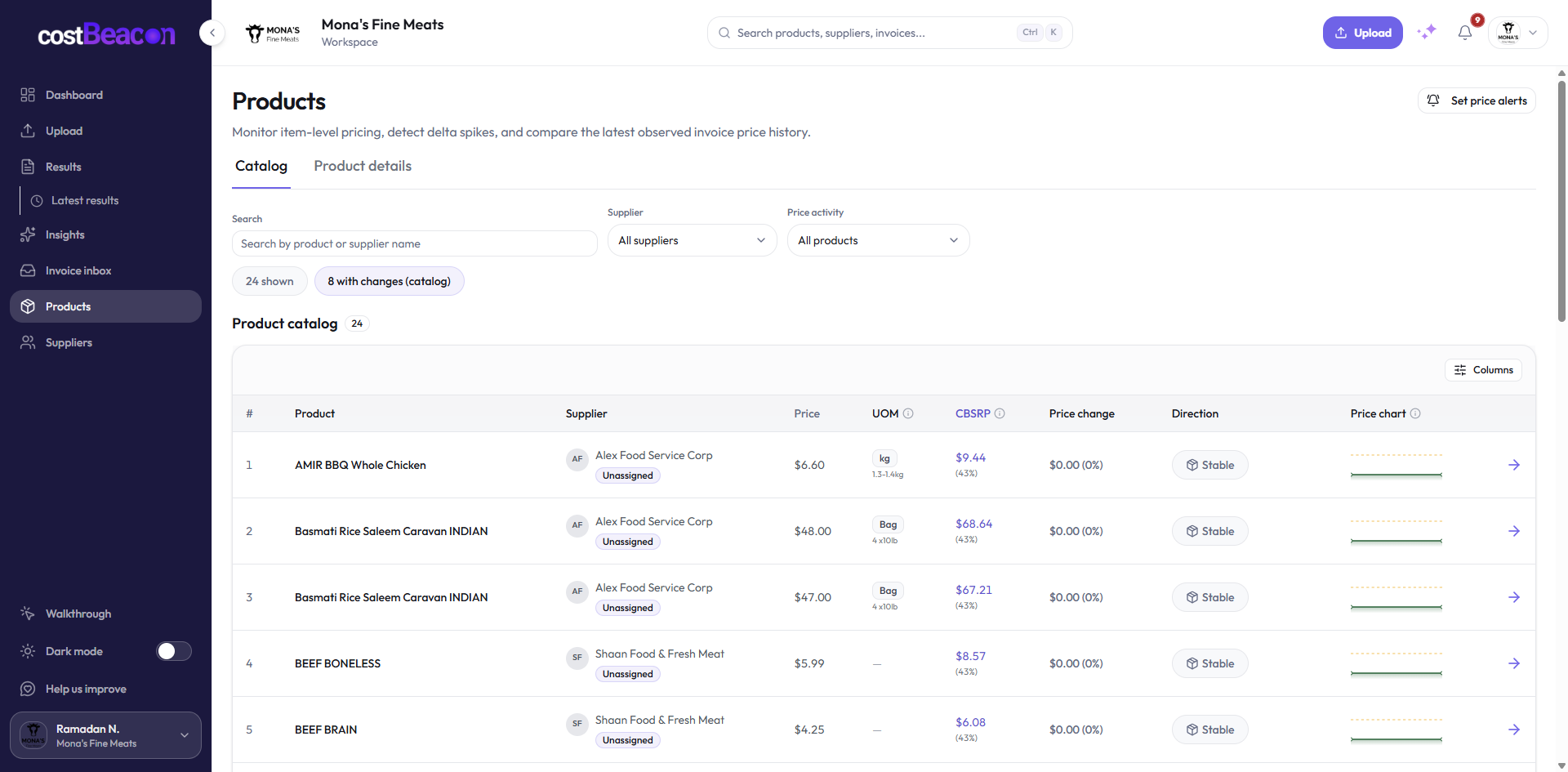
- Monitor price changes: compare new invoice lines against historical prices and flag meaningful changes.
- Show spend patterns: summarize spend by supplier, item, category, and time period.
- Support follow-up: link alerts back to the invoice behind the change.
- Connect workflows: reduce duplicate entry where accounting integrations are available.
The role of AI
AI can read invoices, identify line items, detect anomalies, summarize patterns, and highlight price changes that would be easy to miss manually. The value is not just automation; it is faster attention. The right alert gives you time to question an increase, renegotiate, or adjust purchasing before the cost becomes normal.
Building strong supplier relationships
Cost savings matter, but treating suppliers as purely transactional can backfire. Strong supplier relationships can improve communication, reliability, innovation, and flexibility when conditions change.
What strategic relationships create
- Better communication: issues surface earlier and are easier to solve.
- Improved supply security: key suppliers understand your priorities and forecasts.
- Joint improvement: suppliers may help reduce waste, optimize packaging, improve logistics, or recommend better substitutes.
- Risk mitigation: trusted suppliers are more likely to warn you before problems escalate.
Build trust intentionally
Be fair, communicate consistently, share relevant forecasts, recognize strong performance, involve key suppliers early, and approach problems as joint work. At the same time, balance consolidation with diversity. A strong primary supplier and a viable secondary option often beats overdependence.
Responding to rising supplier costs
Rising supplier costs are common during inflation, commodity volatility, geopolitical disruption, labor pressure, regulatory change, and supply chain instability. A good response combines immediate action with long-term resilience.
Short-term moves
- Renegotiate contracts using recent invoice and price-change data.
- Seek alternative suppliers for non-strategic or highly competitive items.
- Optimize order quantities and inventory carrying costs.
- Review payment terms and early payment discounts.
- Explore value engineering, demand reduction, or freight optimization.
Long-term moves
- Run strategic sourcing reviews across major spend categories.
- Invest in supplier relationship management for critical vendors.
- Use total cost of ownership analysis instead of unit-price-only decisions.
- Diversify critical supply where single-source risk is too high.
- Adopt cost intelligence software so monitoring is continuous.
How CostBeacon supports proactive cost management
CostBeacon is built for invoice-first cost intelligence. It turns supplier invoices into line-item history, highlights price changes, helps you understand spend by supplier and product, and gives you the evidence needed for better procurement conversations.
Instead of discovering a supplier increase months later, you can catch it when the invoice arrives. That is the practical difference between reacting to margin erosion and managing it while there is still time to act.
Next step: upload recent supplier invoices, check which line items changed, and start supplier conversations with the invoice history in front of you.
FAQ
Common questions
How does CostBeacon help with supplier costs?
CostBeacon extracts line-item costs from supplier invoices and tracks product history so you can see price changes before margin is squeezed.
Do I need QuickBooks?
No. CostBeacon works from uploaded invoices; QuickBooks Online sync is optional.